

Resource Pressure and the Challenges of Natural Sand Extraction
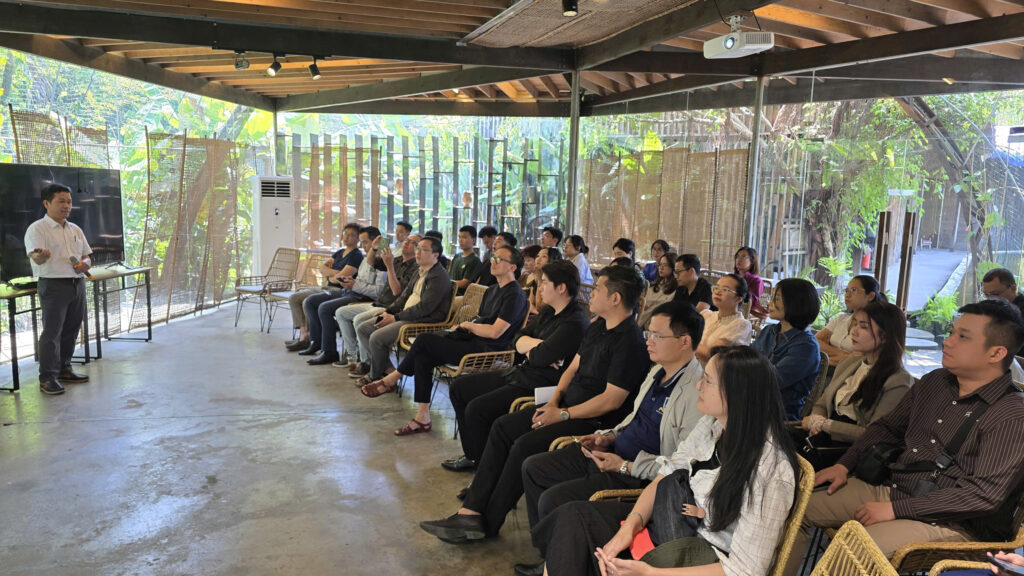
Amid growing pressure on the construction sector from climate change, resource scarcity, and decarbonization requirements, Net Zero Café No. 31, themed “Greening the Construction Sector from a Materials Perspective: Challenges & Solutions,” organized by NET ZERO VIET NAM with sponsorship support from the Association of Structural Wood Architecture – Ho Chi Minh City (SAWA), was held on the morning of March 15, 2026 at Family Garden – Net Zero Hub HCMC. The program served as an important professional platform to connect stakeholders and foster dialogue on green transition across Vietnam’s construction and building materials sectors. Beyond information sharing, the event aimed to shape practical solutions aligned with market realities and the industry’s long-term sustainability roadmap.
One of the key topics discussed at the program was the growing pressure on natural sand resources—an essential input for construction that is gradually becoming depleted. In his presentation, Mr. Ha Huy Anh, MSc in Regional and Urban Planning and National Project Manager of the Sustainable Sand Management Project at WWF-Vietnam, analyzed sediment shortages and hydrological changes in the Mekong River basin that are weakening the resilience of the Mekong Delta. According to insights shared at the event, if current extraction practices continue, mobile sand reserves in the region could be exhausted within about a decade, leading to serious consequences such as land subsidence, riverbank erosion, and increased flood risks.
In addition to basin-level and resource-focused analyses, speakers emphasized that rising construction demand continues to intensify pressure on natural sand supplies. Over-extraction over many years has not only caused riverbank erosion and ecosystem degradation but also driven up material costs and created governance and regulatory challenges. In this context, the construction sector is unlikely to sustain its reliance on natural sand and must gradually shift toward more sustainable material solutions.
Alternative Materials and Technological Pathways for Low-Emission Construction
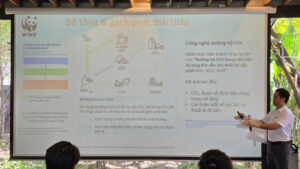
Alongside identifying resource challenges, the program also raised broader questions about the sector’s development model. Many experts stressed that transitioning toward resource-efficient construction must begin with design thinking. Applying circular economy principles at early project stages helps optimize material use, extend building lifecycles, and enable future dismantling, reuse, or recycling. This approach is considered key to reducing pressure on natural resources while lowering lifecycle emissions across construction projects.
Within this framework, several alternatives to river sand were introduced, supported by research findings and real-world applications in southern Vietnam. Materials such as manufactured sand, rice husk ash, fly ash, bagasse ash, blast furnace slag, recycled concrete, and other industrial by-products can partially or fully replace aggregates across various applications, including concrete, masonry units, mortar, and road base layers. Depending on intended use, replacement ratios can range from approximately 20% to 100%, offering significant potential to reduce reliance on natural sand.
Among the solutions discussed, manufactured sand was highlighted as a particularly viable option for wider adoption in the short to medium term. It can replace much of natural sand in applications such as concrete and plastering while offering advantages in supply stability, consistent quality, and controlled material composition. However, experts noted that broader market uptake will require clearer technical standards and greater awareness across the construction value chain.
From a technological standpoint, Net Zero Café also highlighted emerging solutions to reduce emissions in building materials production. These include CO₂ curing technologies for concrete, which allow carbon dioxide to be permanently bound within material structures while improving certain performance indicators. Additional approaches such as recycling construction and demolition waste for carbon storage, as well as low-emission practices in cement and steel production—including alternative fuel co-processing, waste heat recovery for power generation, and carbon capture, utilization, and storage (CCUS)—were also discussed.
Policy Frameworks and Multi-Stakeholder Collaboration for Green Transition
The program also emphasized the importance of policy frameworks and market mechanisms in advancing green transformation within the construction sector. Many companies remain cautious about adopting alternative materials due to limited technical guidance, quality concerns, and entrenched reliance on conventional materials. Therefore, strengthening technical standards, developing clear usage guidelines, and supporting technological innovation are considered essential for accelerating the transition.
At the same time, Vietnam is gradually advancing enabling mechanisms such as a domestic carbon trading platform, green finance initiatives, and international cooperation programs aimed at decarbonizing heavy industry. These efforts are expected to encourage companies to innovate, improve resource efficiency, and meet increasingly stringent sustainability standards in global markets.
Through Net Zero Café, WWF-Vietnam aims to foster multi-stakeholder collaboration among policymakers, businesses, research institutions, and development organizations to build an innovation ecosystem for the construction sector. Potential areas of cooperation include strengthening emissions measurement and accounting capacity, developing technical standards for alternative materials, piloting projects using recycled materials, and advancing low-carbon material supply chains.
In the long term, transitioning toward low-emission construction will not only reduce pressure on natural resources but also create opportunities for technological innovation, new material development, and enhanced competitiveness of Vietnam’s construction sector in the global shift toward sustainability. The overarching message of the program is clear: the future of sustainable construction will be inseparable from the adoption of alternatives to natural sand.