

The third working day of SAWA Go To Japan 2026 (27 August) in Ehime gave the delegation an interesting perspective: in Japan, the decarbonization of the construction sector is increasingly being connected with the expanded use of timber—not only as a material, but also through engineered wood products such as CLT. This approach creates additional value for domestic timber resources while opening up new markets for the timber construction industry.
One important approach is ZEH (Net Zero Energy House)—a housing model designed to achieve high energy efficiency by minimizing energy consumption and combining this with renewable energy, with the goal of achieving a net-zero annual energy balance. Japan’s promotion of ZEH and energy-efficient buildings is creating growing demand for high-performance construction solutions, with timber and engineered wood products increasingly becoming part of the value chain of green buildings. At the national level, Japan is also promoting the use of timber in construction, with CLT identified as one of the key technologies for expanding the potential of timber construction, particularly for larger-scale buildings.
Ehime: Where Timber Policy Meets Decarbonization
In Ehime, this relationship can be seen quite clearly. The prefecture not only promotes the use of timber in construction but also has dedicated support programs for buildings using CLT. In 2026, Ehime continued its program supporting the design and construction of CLT buildings, with the aim of expanding applications, promoting CLT, and increasing demand for the material within the prefecture. At the same time, the prefecture has programs supporting wooden houses and buildings that use Ehime timber, as well as policies promoting the use of timber in construction. This indicates that CLT is not viewed simply as an alternative material, but is becoming part of a broader strategy to increase the value of local timber resources and expand the market for timber construction.
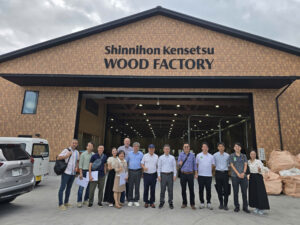
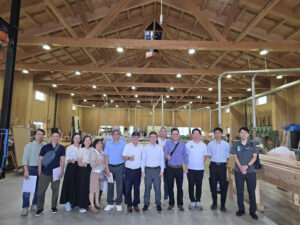
The delegation observed these policies in practice at WOODFACTORY in Matsuyama—a two-story timber structure with a total floor area of approximately 908.87 m². The building uses approximately 76.76 m³ of CLT made from Sugi, with CLT used for the walls and floors. It also incorporates Hime Truss, a timber truss system researched and developed by the Ehime Wood Association, with a span of up to 22.2 meters and major structural components made from Hinoki. The project provides a clear example of how local timber can move beyond conventional sawn wood and be upgraded into engineered structural components capable of playing important roles in modern construction.

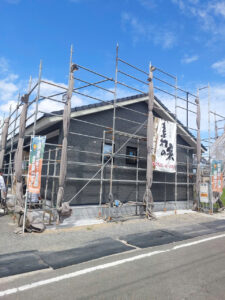
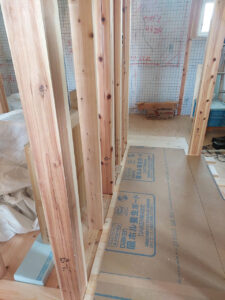
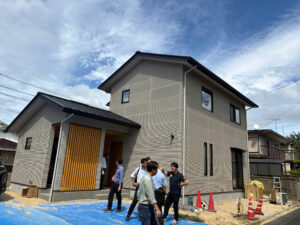
The same story continued at Mr. Onishi’s wooden house in Tōon, a post-and-beam wooden house currently under construction. The contractor has a team of approximately 30 people and is currently developing around 30 structurally timber-framed houses, while also constructing a workshop using Hinoki. The project uses CLT made from Sugi supplied by SUNADAYA. A house of approximately 87 m² costs around JPY 25 million, equivalent to approximately VND 4.1 billion, including complete interior finishing. The flooring uses imported pine. Here, the delegation also learned about the ZEH model, providing a clearer understanding of how energy-efficiency requirements are developing alongside wooden houses and creating new performance criteria for residential construction.


Wooden Houses and Energy Efficiency: Policy Put into Practice
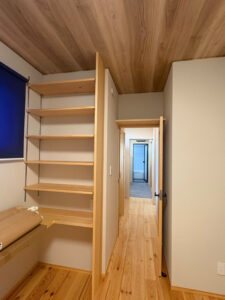
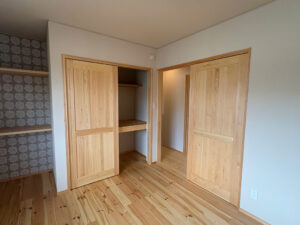
At Mr. Ninomiya’s wooden house in Matsuyama, the delegation continued its observation of a completed post-and-beam wooden house. The two-story house has a total floor area of 118 m² and accommodates a family of four. It uses Sugi and Hinoki columns, Sugi beams, and Japanese pine flooring. Construction took approximately six months, with a total cost of around JPY 30 million.
According to information recorded by the delegation on site, the project received approximately JPY 200,000 in support, with an additional JPY 650,000 potentially available when requirements related to emissions reduction were met. These figures indicate that energy efficiency is not only a technical requirement or environmental objective, but is also becoming a tangible economic factor in residential investment and construction decisions.

What is particularly notable in Ehime is that policies supporting timber development and carbon reduction are not treated as completely separate areas. The prefecture promotes the use of local timber in construction, supports the wider application of CLT, and encourages the development of highly energy-efficient buildings. Together, these policies create an interconnected cycle: decarbonization goals drive demand for energy-efficient buildings; buildings generate demand for timber materials and structural components; CLT and other engineered wood products expand the range of applications for timber; and this, in turn, creates additional demand for Sugi, Hinoki, and the local forestry and timber industries.
For SAWA Go To Japan 2026, the third working day in Ehime provided the delegation with practical observations on the relationship between decarbonization policy, energy efficiency, and the development of timber materials in construction. Through visits to a CLT-based facility and both wooden houses under construction and completed wooden houses, the delegation had an opportunity to examine how Sugi, Hinoki, and engineered wood products are being applied in structural construction, while also observing the interaction between energy-efficiency requirements, support mechanisms, and demand for timber materials in actual construction projects in Ehime. These were among the key subjects directly observed and discussed by the delegation on the third day of the journey.