

Although the postponement of new tariffs has eased pressure on lumber prices, concerns over a housing market downturn have led to a significant drop in prices.
Lumber prices dropped sharply in March 2025 amid fears of a housing market slowdown, despite the wood industry avoiding the imposition of new tariffs by the U.S. government. This has raised concerns about the long-term impact on the construction sector and housing affordability, as home prices and construction costs may continue to rise.
Futures prices for lumber fell below $620 per thousand board feet, down from a two-and-a-half-year high of $685 recorded on March 24. The 10% tariff proposed by Trump on all U.S. imports exacerbated recession fears, weakening housing demand and overall economic activity. The prospect of higher import costs threatens consumer spending and housing affordability, hindering residential construction and renovation projects that typically drive lumber demand. Meanwhile, Canadian exports dropped significantly in February while imports rose, contributing to a trade deficit and raising concerns about slowing economic growth. Additionally, the strength of the Canadian dollar against the U.S. dollar made Canadian lumber more expensive for American buyers, further dampening demand. At the same time, both countries’ weaker economic conditions and uncertainty have slowed construction activity, reducing supply pressure and further weakening demand.
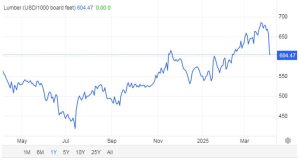
Although the U.S. administration decided not to impose additional tariffs on lumber imports from Canada, helping to ease price pressure, the housing market remains a major concern. The cooling housing sector, coupled with signs of an economic downturn and potential interest rate hikes by the U.S. Federal Reserve, has caused lumber prices to fall by over 10% quickly.
Experts point to high borrowing rates, inflation, and weakening consumer purchasing power as the main drivers behind the waning demand for new homes. This has directly impacted demand for lumber in construction, making lumber prices highly sensitive to market fluctuations.
For homebuilders, the drop in lumber prices offers a glimmer of optimism after years of struggling with rising material costs. However, the price decline is not entirely good news, as it reflects deeper concerns about the housing market’s health. A sustained drop in housing demand could stall construction activity, making it harder to sell new homes and reducing profit margins for builders.
While falling lumber prices may ease the burden of material costs, they also raise alarms among builders about an uncertain future for the real estate sector. Investors and construction firms are likely to face difficult conditions if housing demand does not rebound in the near term.
Looking ahead, the outlook for the lumber industry remains uncertain. Although avoiding new tariffs has provided temporary relief, the long-term trajectory depends on a recovery in the housing market. If the economy continues to weaken and housing fails to rebound, lumber prices could remain volatile, posing challenges for builders and consumers alike.
Builders and consumers will need to closely monitor upcoming trade and economic policies, as these factors will continue to influence lumber prices and housing affordability.
Despite the deferral of new tariffs, which temporarily eased lumber price pressures, housing market concerns continue to weigh heavily. The construction sector is facing significant challenges amid softening housing demand and volatile material costs. Trade policy decisions and broader economic factors will remain key determinants of market stability for both the lumber and construction industries in the near future.