
Material transition is no longer optional—it is becoming a mandatory requirement. While legal frameworks to support this transition are already in place, a significant gap remains between policy and implementation.
A mandatory requirement
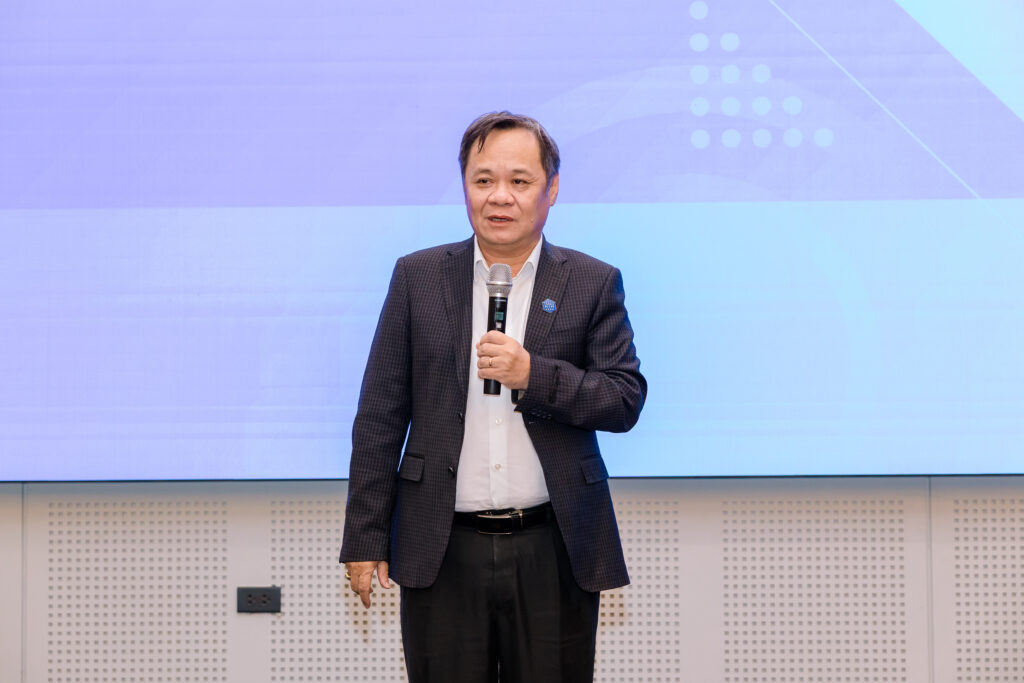
Speaking at the Forest Talk & Link #2 program titled “Material Transition – From Policy to Architecture” held on the morning of March 27, organized by the Ho Chi Minh City Structural Wood Association (SAWA) with technical support from Forest Trends and in collaboration with UKAID, NICFI, and ConsMedia, Mr. Vo Quang Ha, Chairman of SAWA, shared that in recent years, the construction industry has been facing increasingly clear pressures related to emission reduction, efficient resource use, and meeting sustainability criteria.
In this context, building materials have become a strategic factor, directly influencing the entire lifecycle of a construction project.
According to him, material transition is taking place across multiple levels—from policy and production to design and construction. For wood materials, requirements now go beyond technical performance to include legality, traceability, and sustainability of raw materials.
“Promoting the use of plantation timber, certified wood, and alternative materials is becoming an important direction in the current context,” he emphasized.
According to Dr. Nguyen Thi Thu Trang, former Director of the WTO and Integration Center (VCCI), market requirements can be divided into two parallel groups. “Hard” requirements include mandatory legal regulations such as the Carbon Border Adjustment Mechanism (CBAM), the EU Deforestation Regulation (EUDR), eco-design standards, and circular economy frameworks. “Soft” requirements come from consumers and buyers, which are increasingly influential in shaping market decisions.
“A key point is that green criteria are shifting from voluntary to mandatory, and from fragmented to systemic. This forces enterprises to undergo comprehensive restructuring if they want to maintain export capacity and participate in global value chains,” she noted.
Diverse alternative materials and the “loneliness” of the design sector
In this context, wood materials—especially plantation timber and engineered wood—are emerging as highly competitive options. Unlike high-emission materials such as steel, cement, or aluminum, wood is easier to align with traceability requirements and circular economy principles due to its reusability and recyclability.
Notably, engineered wood products such as CLT, Glulam, and LVL enable prefabrication, reducing construction waste and improving energy efficiency—key priorities in international markets.
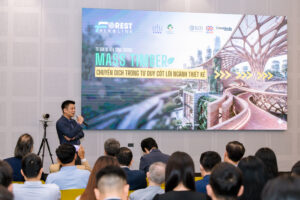
Architect Ta Duc Quang, CEO of ConsMedia, highlighted mass timber in particular. This large-scale engineered wood material is produced by compressing and bonding multiple layers of smaller wood elements into large panels, beams, or columns. It is considered a sustainable alternative to concrete and steel, offering carbon storage capacity, high structural performance, faster construction, and distinctive architectural aesthetics.
Compared to traditional materials, mass timber can reduce structural weight by up to 80%, lower investment costs by around 10%, reduce waste by 40%, accelerate construction by 20%, and store over 900 kg of CO₂ per cubic meter of wood.
Despite being considered a breakthrough in construction materials, in Vietnam, less than 10% of projects used this material as of 2025, with up to 90% of components being imported. Five key bottlenecks have been identified: gaps in standards and regulations, outdated design thinking, lack of DFMA (Design for Manufacturing and Assembly), cost pressures versus sustainability value, and fragmented supply chains.
“The design sector often feels ‘isolated’ due to the lack of alignment with contractors and suppliers. It is difficult to find local manufacturers that can guarantee precision and certification standards, leading to heavy reliance on foreign contractors,” Mr. Quang shared.
Government and businesses must move together in policy implementation
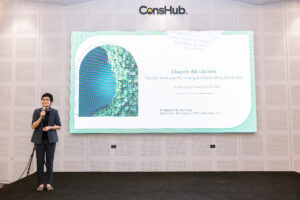
Regarding Vietnam’s green policy framework, Dr. Nguyen Thi Thu Trang noted that there have been notable institutional and legal developments.
For example, the revised Corporate Income Tax Law (2025) identifies sectors such as renewable energy, clean energy, waste-to-energy, environmental protection, and the production of composite and lightweight construction materials as eligible for tax incentives. The revised Export and Import Tax Law (2025) grants tax exemptions for imported goods used in science, technology, innovation, and digital industry development, including machinery, equipment, spare parts, and specialized materials.
The 2023 Law on Bidding also includes incentives for environmentally friendly products and services, while Decree 24/2024/ND-CP provides preferential treatment for products certified with eco-labels and energy labels.
The Law on Environmental Protection (2020) defines green procurement as the purchase of environmentally friendly products and services certified with Vietnam’s eco-label or recognized under legal regulations, and prioritizes such procurement in public investment projects funded by the state budget.
“However, there is still a gap between policy and implementation. Many support programs exist, but how many businesses can actually access them? I am aware that many companies have developed new materials but are not eligible for incentives,” she noted.
Despite existing regulations, there remain significant gaps in areas such as research and development of green materials, investment in green material production, and the promotion of green consumption.
What defines ‘green’? A key question for businesses
At the event, one of the most frequently raised questions from businesses was: “What does ‘green’ actually mean? What qualifies a product as ‘green’?”