 Mass timber is gradually emerging as one of the most significant trends in the global construction industry, as more countries push for green buildings and lower carbon emissions. While steel and concrete once dominated modern construction, engineered wood is now increasingly viewed as a key material for the next generation of buildings.
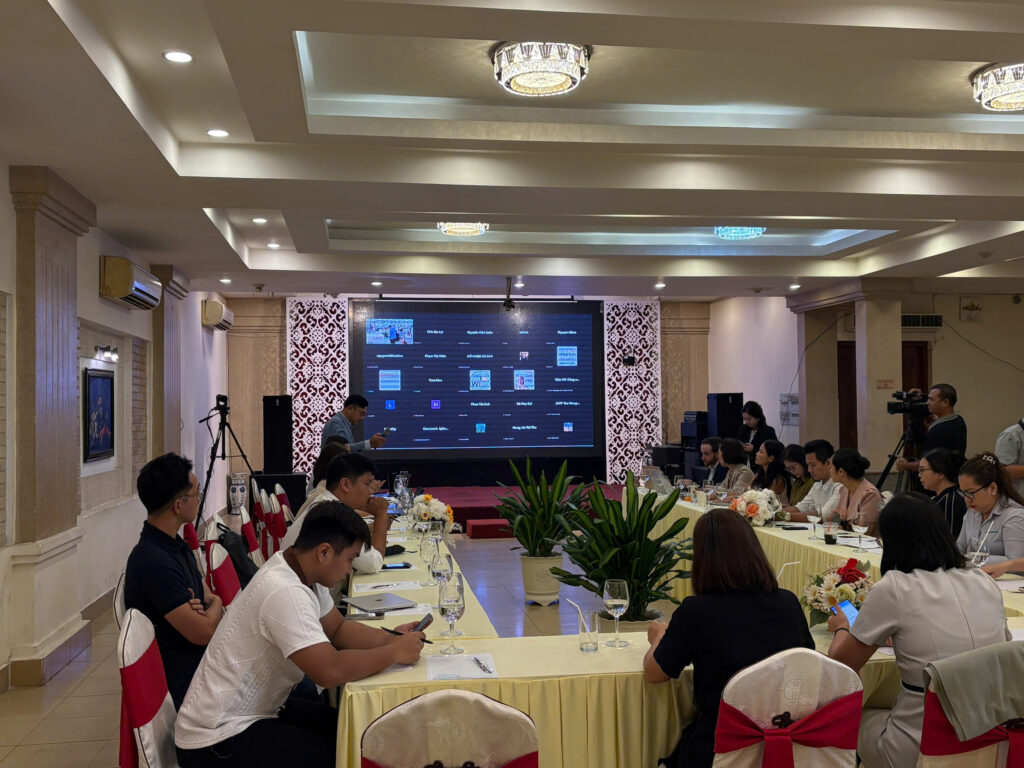
On May 19, 2026, at the consultation workshop “Assessing the Potential and Opportunities for Developing the Engineered Wood Materials Market in Construction” organized by the Dong Nai Wood and Handicraft Association (DOWA) in collaboration with SIPPO, ILO and international partners, experts from Vietnam and abroad shared experiences and lessons from Switzerland, Singapore, Japan, Malaysia and other markets on the development of mass timber.
At the workshop, expert Pham Duc Thieng presented the study “Assessing the Potential and Opportunities for Developing the Engineered Wood Materials Market in Construction for Vietnam,” conducted within the framework of a SIPPO-supported project and international cooperation initiatives. The study highlighted international experiences while offering recommendations for Vietnam’s emerging mass timber market.
The discussions showed that mass timber is not simply a new material, but part of a broader transformation of the construction ecosystem — from technical standards and manufacturing technologies to public policy and market development.
SWITZERLAND: CARBON POLICY CAN RESHAPE AN ENTIRE INDUSTRY
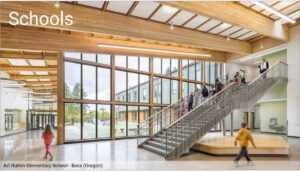
Switzerland is considered one of Europe’s pioneers in the commercialization and standardization of engineered timber construction materials. However, more than a decade ago, the country’s domestic timber industry faced severe pressure as cheaper imported wood from Austria and Eastern Europe flooded the market, forcing many small sawmills to shut down. According to Laurent Corpataux, a SIPPO expert, the turning point came through carbon policy. The Swiss government, together with the Klik Foundation, launched programs promoting the use of domestic timber as part of the country’s carbon reduction strategy. Timber companies received support to invest in machinery upgrades and modernize production facilities. Over the past decade, nearly CHF 1 billion has been invested into the Swiss timber industry, with the program expected to continue through 2030. Notably, Switzerland did not begin with iconic skyscrapers. Instead, the country focused on schools, public buildings, sports facilities and low-rise housing projects to gradually change market perceptions and demonstrate the feasibility of timber construction.
SINGAPORE: NO FORESTS, YET A STRONG MASS TIMBER STRATEGY
Despite lacking forest resources, Singapore has become one of Asia’s most active promoters of engineered timber buildings through its green building policies and DfMA (Design for Manufacturing and Assembly) strategy. Laurent Corpataux noted that Singapore’s extremely high on-site labor costs pushed the country to prioritize prefabrication and factory-based manufacturing in order to reduce construction time and improve efficiency. More importantly, Singapore established a clear roadmap that included pilot projects, technical guidelines, design standards and close coordination among stakeholders. In the early stages, the government reportedly subsidized up to 80% of project costs to reduce market risks and accelerate technology adoption. Singapore’s experience demonstrates that mass timber is not only about materials, but also about industrialized construction and integrated supply-chain planning.
MALAYSIA: LOCAL STANDARDS MATTER
Malaysia offers another important lesson for emerging timber markets. While the country adopted Eurocode as a foundation, it later recognized that European standards did not fully address the characteristics of tropical timber species. Malaysia therefore conducted additional testing on local wood species and gradually developed standards tailored to domestic conditions. This process involved universities, businesses, research institutes, timber suppliers and government agencies working together. For Vietnam, this is particularly relevant, as the country still lacks a comprehensive system of technical standards, testing protocols and fire safety guidelines for engineered timber buildings.
JAPAN: BUILDING ON A LONG TRADITION OF WOOD USE
Japan has a long history of timber construction and is actively increasing the use of wood in public buildings. What Japan has done particularly well is combining public policy, technical capacity development and strategies to increase the use of domestic timber resources. This approach is highly relevant to Vietnam, which also possesses strong plantation forest resources and an established wood-processing industry.
VIETNAM NEEDS A PRACTICAL PATHWAY FOR MASS TIMBER
According to the study conducted by expert Pham Duc Thieng under the SIPPO-supported project, Vietnam’s mass timber market is still at a very early stage compared to Europe or North America. However, this does not necessarily mean the country is behind. On the contrary, Vietnam still has time to observe international experiences and shape a more strategic and sustainable development pathway from the outset. Vietnam already possesses several important advantages. The country’s wood exports reached more than USD 16.7 billion in 2025, while domestic wood processing capacity has become increasingly sophisticated. Plantation forest resources are also continuing to expand, creating a strong foundation for future engineered wood production.
Yet the biggest challenge does not lie in manufacturing technology itself, but in the broader market ecosystem. Investors remain concerned about durability, fire resistance and termite protection. Architects and engineers still lack sufficient quantitative data to demonstrate the technical and environmental performance of timber buildings. Meanwhile, Vietnam’s technical standards, testing systems and design guidelines for mass timber remain incomplete. For this reason, many experts believe Vietnam should avoid rushing into symbolic super-tall timber towers. Instead, the country should initially focus on low-rise and mid-rise projects such as resorts, eco-tourism developments, schools, restaurants, hospitality spaces and medium-scale prefab buildings. These segments are considered more realistic in terms of cost, technical capacity and market acceptance, while also matching the current capabilities of domestic enterprises.
According to international experts, the key lesson for Vietnam is that the industry should begin with market development rather than technology alone. Instead of immediately investing in large-scale CLT factories, the priority should be creating market demand, developing demonstration projects, strengthening technical standards and building confidence among developers and end users. Experiences from Switzerland, Singapore, Japan and Malaysia show that mass timber is not merely about introducing a new construction material. It represents a broader transformation of the construction ecosystem — encompassing public policy, technical standards, workforce development, research, manufacturing and market creation. For Vietnam, this could become an opportunity for the wood industry to enter a new phase of development — moving beyond furniture exports and participating more deeply in the global value chain for sustainable and low-carbon construction.