
Deep integration, rising requirements
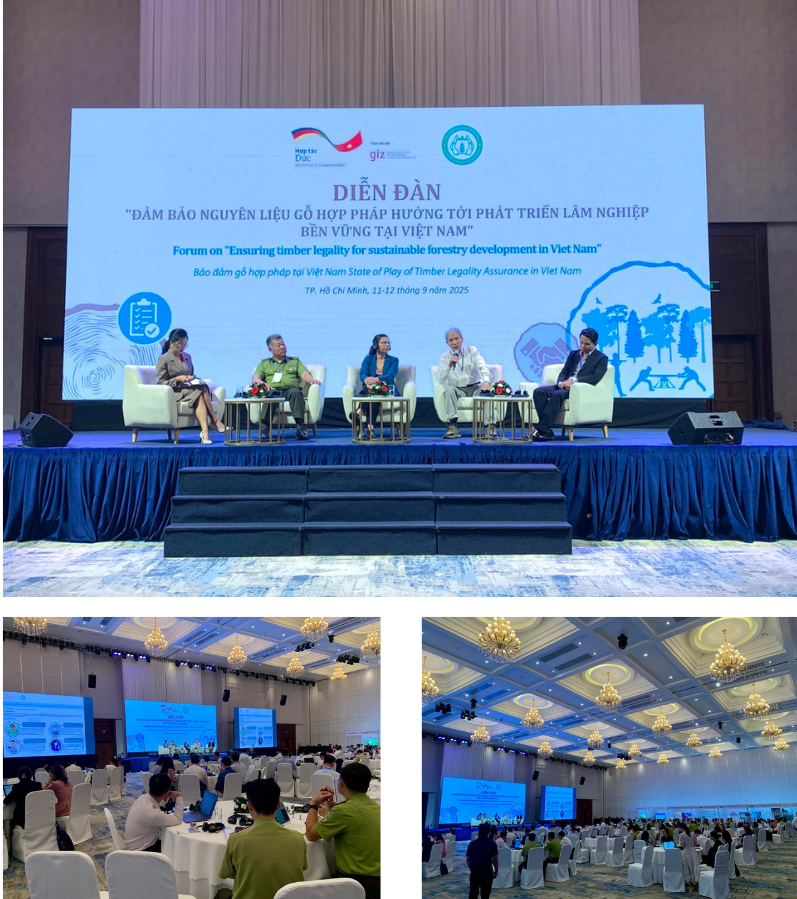
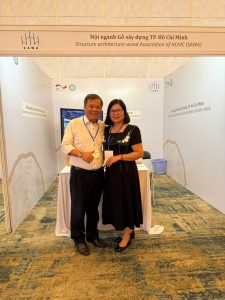
At the Forum “Ensuring Timber Legality for Sustainable Forestry Development in Viet Nam”, co-organized by the Viet Nam Administration of Forestry, the Forest Protection Department, the German Agency for International Cooperation (GIZ), and partners on September 11–12 in Ho Chi Minh City, Mr. Võ Quang Hà – Chairman of TAVICO Group, Chairman of the Ho Chi Minh City Association of Structure Architecture Wood (SAWA), and Standing Vice Chairman of the Dong Nai Wood and Handicraft Association (DOWA) – joined Topic 3: Actions for Verification in the Timber Value Chain and FLEGT Licensing Procedures.
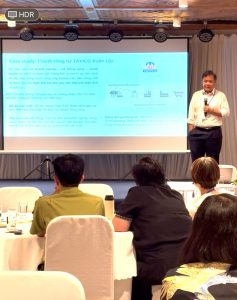
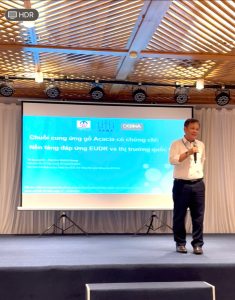
In his presentation titled “Certified Acacia Timber Supply Chains – A Foundation for Meeting EUDR and International Market Requirements”, Mr. Hà introduced the linkage model at TAVICO Xuân Lộc (Dong Nai) as a specific case to illustrate how legal and sustainable timber supply chains can be developed.
As Vietnam’s wood industry integrates more deeply into the global market, challenges are mounting. The EU has issued the Deforestation Regulation (EUDR), requiring timber products to prove they are not linked to deforestation and to provide precise geographic data. The VPA/FLEGT Agreement requires shipments to the EU to carry FLEGT licenses, while the U.S. Lacey Act has expanded to cover wood products and forest-based commodities. These standards go beyond legality, extending to environmental protection, labor, and social responsibility.
Within this context, acacia – often referred to as the “national tree” of the wood sector – plays a central role. Vietnam currently has more than 2.3 million hectares of acacia plantations, accounting for half of the total plantation area and supplying 25–27 million cubic meters of timber annually. However, only 19% of this area is FSC-certified – the essential “passport” for entry into high-end markets. This gap between potential and reality highlights the urgent need for greater transparency and sustainability across supply chains.
The Xuân Lộc model – a tripartite linkage
In his presentation, Mr. Hà highlighted the model being implemented in Xuân Lộc, Dong Nai as a concrete example of building transparent supply chains. More than 300 smallholder households, managing around 3,200 hectares, have joined forces with enterprises and local authorities to develop acacia plantations certified by FSC.
Farmers are organized into groups to obtain certification and secure stable market access. Enterprises act as intermediaries, providing technical support and connecting products to export markets. Local authorities facilitate administrative procedures, policies, and the development of concentrated raw material areas.
According to Mr. Hà, the model demonstrates that when the three parties work together, the timber supply chain can operate transparently and sustainably. Beyond meeting legal requirements, it also enhances economic value for farmers, creates local jobs, and strengthens the credibility of exporting companies.
Persistent bottlenecks
Nevertheless, the Xuân Lộc case also reflects broader challenges facing the industry. High FSC certification costs remain a major barrier for smallholders and small-to-medium enterprises. Some companies have invested in certification but failed three times in a row when participating in timber auctions, exposing gaps in market mechanisms.
Another obstacle lies in green credit. Although expected to support sustainable forestry development, such financing remains difficult to access due to complex procedures and stringent collateral requirements. Smallholder farmers, in particular, are often excluded, limiting the effectiveness of these funds. Furthermore, many smallholders lack the management capacity and familiarity with international compliance procedures needed to join certified supply chains.
From this experience, Mr. Hà emphasized that verification and FLEGT licensing are not merely legal obligations, but opportunities to raise the value and reputation of Vietnamese timber in global markets. To seize these opportunities, the sector needs more effective linkage models, suitable financial mechanisms, and closer coordination among stakeholders.
The Xuân Lộc story is just one snapshot, but it underscores a broader reality: “legal” and “sustainable” are no longer slogans, but the essential passport for Vietnamese timber to go further on the international stage.