

(TBTCO) – As global environmental standards become increasingly stringent, green materials are no longer just a trend but a “must-have ticket” to access international markets. With its existing advantages, Vietnam’s wood industry—particularly plantation timber and engineered wood—is facing a major opportunity to reposition itself within the sustainable construction value chain.
“Green rules” are reshaping the market
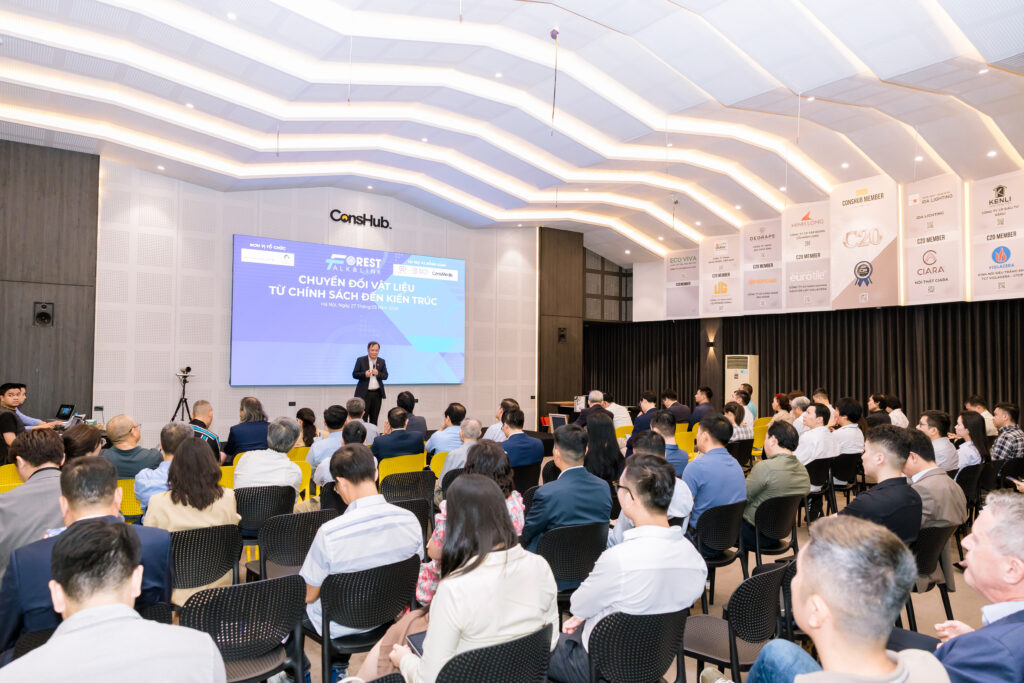
At the Forest Talk & Link #2 event titled “Material Transition – From Policy to Architecture” held on March 27, organized by the Ho Chi Minh City Structural Wood Association (SAWA) with technical support from Forest Trends and in collaboration with UKAID, NICFI, and ConsMedia, experts noted that the global market is rapidly shifting toward green transformation.
According to Dr. Nguyen Thi Thu Trang, former Director of the WTO and Integration Center (VCCI), market requirements now go beyond technical standards and have formed two distinct layers of pressure: mandatory legal regulations such as the Carbon Border Adjustment Mechanism (CBAM) and the EU Deforestation Regulation (EUDR), alongside increasing pressure from “green” consumers.
A notable shift is that environmental criteria are moving from voluntary to mandatory, forcing businesses to undergo comprehensive restructuring if they wish to maintain export competitiveness. In this context, wood materials are emerging as a favorable option, as they are not part of high-emission groups like steel or cement, while also being more adaptable to traceability and circular economy requirements.
In particular, engineered wood products such as CLT, Glulam, and LVL enable prefabrication, helping reduce construction waste and save energy—key priorities in international markets.
At the same time, the rise of “green consumers,” who are willing to pay a premium for environmentally friendly products, is opening up a highly promising segment for wood-based materials.
Significant potential, but policy support is crucial
Globally, the timber construction market is projected to reach USD 17.7 billion by 2025 and exceed USD 41 billion by 2035, with an annual growth rate of nearly 10%. North America and Europe are leading the trend, while the Asia-Pacific region accounts for more than 30% of the market.
However, Vietnam faces a paradox. Despite exporting over USD 15 billion in wood products annually, the application of engineered wood in construction remains very limited. As of 2024, only around 10 projects nationwide have utilized such materials, with most components still imported.
According to architect Ta Duc Quang, CEO of ConsMedia, the challenges stem from systemic bottlenecks, including the lack of technical standards, outdated design approaches, high upfront investment costs, shortages of specialized human resources, and an incomplete domestic supply chain.
Meanwhile, the pressure to transition is unavoidable. The global construction sector accounts for approximately 37% of total greenhouse gas emissions, with traditional materials such as steel and concrete being major contributors. Studies show that engineered wood can reduce emissions by up to 40% when applied comprehensively, while also reducing structural weight and shortening construction time.
To unlock this potential, experts emphasize the need for strong policy support. First, tax incentives, fee reductions, and investment support for green materials must be strengthened. Second, public procurement—accounting for 15–20% of total demand—should play a leading role by prioritizing environmentally friendly materials. In addition, developing a system of standards and regulations for wood construction is essential to create a transparent legal framework.
According to Mr. Vo Quang Ha, Chairman of the Ho Chi Minh City Structural Wood Association (SAWA), building materials are now under direct pressure from requirements to reduce emissions, optimize resource use, and meet sustainability criteria.
In this context, materials are no longer just a technical choice but a decisive factor throughout the entire lifecycle of a project—from design to operation. With more than one million workers in the industry, promoting the use of plantation timber not only creates economic value but also contributes to resource conservation and sustainable development.
The shift toward green materials opens up significant growth opportunities, but not for outdated business models. According to Mr. Nguyen Minh Cuong, CEO of Minh Long Wood Company, the industry still largely operates under a processing model with low added value and profit margins, and has yet to build strong international brands despite high export value.
In addition to external factors such as geopolitical instability, rising logistics and raw material costs, and increasing technical and trade barriers, the industry also faces internal pressures, including rising labor costs due to an aging workforce and growing competition from cost-advantaged countries like India and Indonesia. As a result, Vietnam’s competitive edge is gradually diminishing. Most value-added activities lie in branding and distribution, while manufacturing accounts for only a small share of the final retail price.
To address these challenges, some enterprises have begun shifting toward developing new materials and products, such as antibacterial wood materials, low-emission products, and materials suited to tropical climates. The goal is to improve production efficiency while meeting increasingly diverse market demands.
Initiatives such as “Forest for Future” and the Forest Talk & Link dialogue series are expected to help build a structural wood ecosystem in Vietnam, connecting policy with practice. If leveraged effectively, green materials could not only enhance the export value of the wood industry but also become a new growth driver for the entire construction sector in the coming decade.