
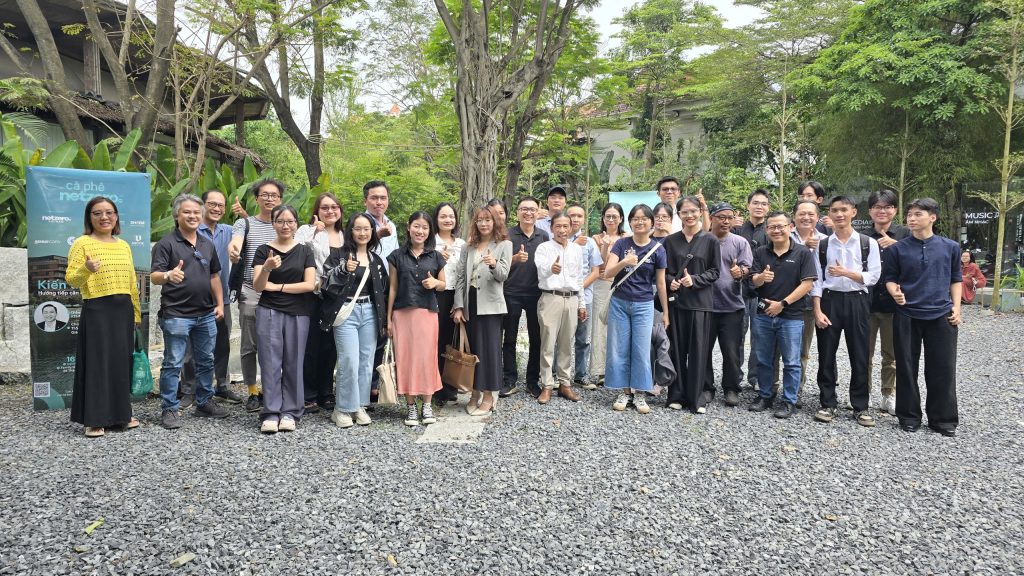
At the Net Zero Coffee 27 event held yesterday (Sunday, November 10) in Ho Chi Minh City, architect Nguyễn Trung Thông offered a compelling perspective on regenerative architecture — an approach that views architecture not merely as shaping forms or creating technical solutions, but as a journey to restore relationships between people, space, and community.
The event was organized by Net Zero VN with the support of the Ho Chi Minh City Association of Structural Wood Architecture (SAWA), an organization promoting sustainable development through the use of wood — a regenerative material deeply rooted in human life for centuries.
Although regenerative architecture is built upon three core pillars — material regeneration, functional regeneration, and community regeneration — the presentation by architect Nguyễn Trung Thông from NU Architecture & Design placed the strongest emphasis on the last pillar: reviving communities and nurturing human connection.
Material Regeneration: Extending the Life and Story of Space
According to architect Thông, material regeneration requires a shift in how we view building materials. They should not be seen as resources consumed once and then discarded, but as living entities with long lifecycles, carrying cultural and historical imprints. Materials, he noted, should transition across different structures, taking on new roles as cities evolve.
In particular, the use of wood — a material capable of storing carbon — helps reduce emissions while creating warm, approachable, and character-rich spaces. As Vietnam moves toward its Net Zero goals, material regeneration emerges as a strategic direction to reduce resource extraction and construction waste. Each project becomes a continuation of a material’s lifecycle, paving the way for a more sustainable architectural future.
Functional Regeneration: Helping Buildings Continue to Live with Society
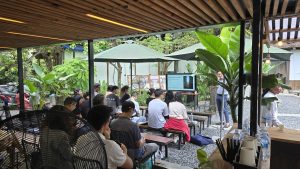
The second pillar — functional regeneration — reflects the adaptability required in modern urban environments. Instead of demolition and rebuilding, which consumes energy and generates significant waste, architects today seek to breathe new life into existing structures.
An old factory can be transformed into a community learning center; a deteriorating building can be reactivated as a library or co-working space. These transformations save costs, reduce environmental pressure, and preserve urban continuity.
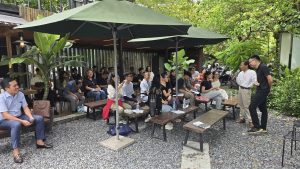
Function, architect Thông stressed, should be a flexible flow shaped by human needs. Architecture, therefore, cannot remain static while society evolves. When regenerated properly, old structures — once considered obsolete — become new assets for the community, continuing to serve generations to come.
Community Regeneration: The Ultimate Goal of Regenerative Architecture
Among the three pillars, community regeneration is regarded by architect Thông as the most essential. A building only becomes meaningful when it fosters human connection.
Old structures, when thoughtfully renewed, serve as bridges between the city’s memory and contemporary life — places where residents meet, converse, and build relationships. Such spaces preserve local heritage while contributing to a shared identity for the community.
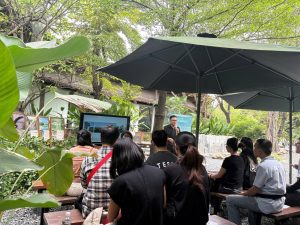
Regenerative architecture not only revives spaces but also revitalizes the people who inhabit them. When a structure saves resources, adapts to changing needs, and strengthens local communities, it does more than simply “exist” — it truly “lives.”
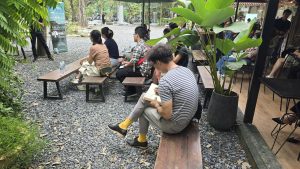
From this perspective, regenerative architecture is not merely a technical approach but a human-centered philosophy of sustainable development. In rapidly developing Vietnamese cities, this approach helps ensure that people remain connected to their memories, culture, and social relationships — the very elements that sustain a healthy urban environment.
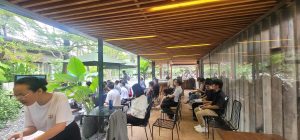
The participation of SAWA in the program highlights how sustainable thinking is spreading not only within the architectural community but also across the building materials industry. Structural wood — a representative regenerative material — combined with a community-centered regenerative mindset, opens new pathways for the future of Vietnam’s built environment.