

Exploring the Wood Construction Ecosystem in New Zealand
The Ho Chi Minh City Association of Structural Wood Architecture (SAWA) successfully organized its first-ever SAWA – GOTO – NEW ZEALAND TOUR. The SAWA – GOTO – Mass Timber Countries Tour is an annual program designed for businesses, architects, and experts to visit, learn, and build in-depth cooperation in large-format mass timber technology with countries that are global leaders in this field. The program aims to promote collaboration and development in the large-format mass timber (GỖ TO) industry for Vietnam’s green building sector. Mass timber is considered a leading discipline in the global movement toward sustainable construction.


From 18–22 October 2025, the SAWA delegation worked in Auckland, Nelson, Rotorua, and Tauranga (New Zealand). New Zealand is among the world’s pioneers in the development of the mass-timber industry. These provinces concentrate many industrial manufacturers and impressive large-format mass timber buildings, offering new perspectives for comprehensive development of mass timber.
The delegation consisted of 11 members, led by Mr. Vo Quang Ha, Chairman of SAWA. Joining him were Vice Chairmen Mr. Adam Corrall, responsible for Global Partnerships; Mr. Neil Dodunski, responsible for Structural Systems; and Mr. Nguyen Manh Binh San, responsible for Architecture. The delegation also included representatives from major industry players, including TAVICO Group, Fine Hospitality Furnishings, and TDH Green Construction Solutions of Tran Duc Group, along with representatives from Henkel Group, New House Solution, and TACASA.
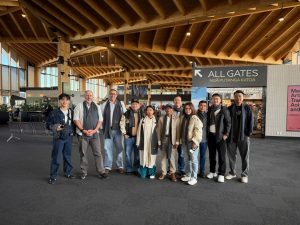
Throughout the journey, under the tight organization and strong local technical credibility of leading wood-construction expert Mr. Neil Dodunski, who also serves as Vice Chairman of SAWA, the delegation received warm and thoughtful hospitality from New Zealand’s top companies and organizations. This created valuable opportunities for the Vietnamese delegation to gain a comprehensive view of the country’s wood-construction industry.
At leading factories such as Claymark, Sequal, and Nelson Pine Industries, the delegation observed how New Zealand has built a complete value chain for wood construction—from forest plantation and harvesting to processing and building applications. Radiata Pine, a local timber species, has been developed for greater added value, transformed into multiple mass-timber engineered materials such as GLT (glulam), LVL (laminated veneer lumber), and CLT (cross-laminated timber) for use in construction. A shared characteristic among these enterprises is their operational standardization combined with a long-term mindset in sustainable forest resource development.
Sequal’s philosophy “Give More” and Claymark’s “Ingrained Precision” reflect a clearly defined direction of balancing economic efficiency with contributions to community and the environment—values that are increasingly becoming global norms within the wood industry.
The role of science – technology – policy in promoting wood construction
Beyond manufacturing, research and development are considered a core pillar of New Zealand’s wood industry. At the Scion Research Institute, the delegation learned about models that integrate science, technology, and policy to drive material innovation. Laboratories, testing lines, and demonstration buildings such as Eastwood Café show New Zealand’s efforts to advance research beyond materials, aiming toward a circular economy and low-carbon strategy. Close coordination among researchers, businesses, and government has created a solid foundation for structural wood to be widely adopted in building construction.

From a policy perspective, the visit to Tauranga City offered the delegation firsthand insights into how local authorities encourage the use of sustainable materials. Many mass-timber projects have been integrated into urban development and architectural planning. Favorable administrative procedures and investment environments further demonstrate the important role of government in promoting structural wood.
During visits to Red Stag Wood Solutions and various practical construction projects, the delegation noted that mass-timber technology in New Zealand has entered a mature phase. Large-scale CLT production facilities and construction applications using LVL and CLT not only support environmental goals but also enhance design and construction efficiency, shorten building timelines, and optimize the lifecycle of projects.
Opening cooperation pathways: Bringing New Zealand wood into Vietnam’s green buildings
This study tour is considered an important starting point toward deeper cooperation between SAWA and New Zealand’s wood-construction ecosystem. Both parties discussed the potential introduction of mass-timber materials—particularly LVL—into pilot building models in Vietnam, supported by New Zealand enterprises through engineering know-how and international-standard design approaches. At the same time, SAWA and Scion are exploring collaboration on testing and certifying structural components for large-format mass-timber wood construction, serving as an early foundation for developing complete design – verification – and construction standards for large-format structural wood in Vietnam.

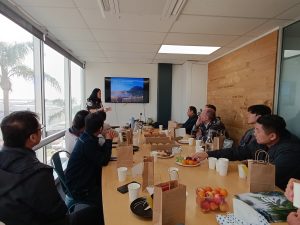
The SAWA GOTO TOUR is held annually to connect Vietnam with countries that have advanced wood-construction architecture, creating opportunities for learning and knowledge transfer, and gradually shaping and developing the wood-construction industry in Vietnam.
With the expectation of beginning with the concept of “New Zealand large-format mass timber contributing to Vietnam’s green buildings,” SAWA aims to ensure that wood construction materials become a practical and sustainable option for future building projects.