
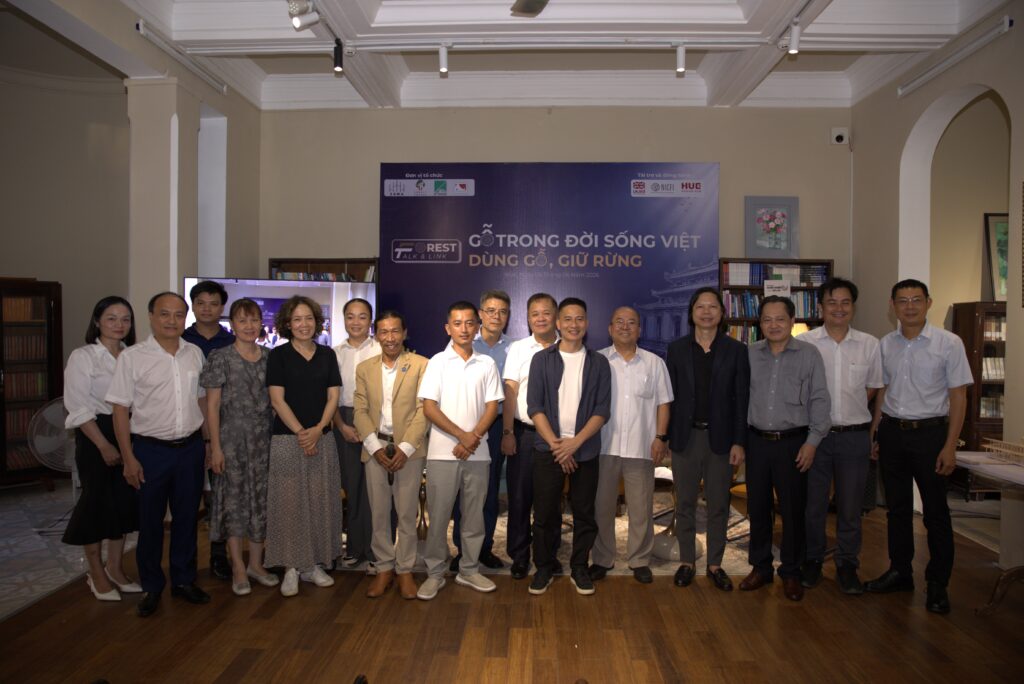
As the world seeks solutions to reduce carbon emissions and promote sustainable development, wood is increasingly being recognized as one of the key materials of the future. However, for wood to truly become part of the solution to environmental challenges, the question is not only how wood should be used, but also how its use can help create more forests, more livelihoods, and greater value for local communities. This was also the central theme of the Forest Talk & Link event, “Wood in Vietnamese Life – Living with Wood, Sustaining Forests,” held in Hue on June 5, 2026.
LIVING WITH WOOD, SUSTAINING FORESTS
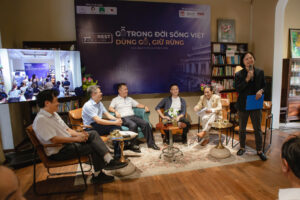
According to Mr. Vo Quang Ha, Chairman of the Ho Chi Minh City Structure Architecture Wood Association (SAWA), many people still believe that protecting forests means limiting the use of wood. However, this perspective is gradually changing as growing evidence shows that the use of legal and sustainably sourced wood can serve as a driving force for maintaining and expanding plantation forests. As the global construction sector moves toward lower-carbon development, wood has emerged as a green material with many advantages. In addition to being a renewable resource, wood stores carbon throughout its service life, helping reduce emissions compared to many other construction materials. For this reason, many countries are promoting the use of wood in construction, architecture, and interior design as part of their green building strategies.
In Vietnam, promoting wood consumption carries an even broader significance. When there is market demand for wood products, people have greater motivation to plant trees. When forests generate higher economic value, forest owners have stronger incentives to maintain forest land rather than converting it to other uses. This creates a positive cycle in which more wood is used, more forests are planted, and local livelihoods are improved. According to Mr. Ha, the issue is not whether wood should be used, but rather what kind of wood is used and how it is produced. If the raw material comes from sustainably managed forests with certification and clear traceability, the use of wood can contribute to green economic growth while reducing pressure on natural forests.
KEEPING FORESTS LONGER TO CREATE GREATER VALUE

If the use of wood encourages people to plant forests, another challenge is how to encourage them to keep forests standing for longer periods. According to Mr. Vo Van Du, Chairman of the Hue Forest Owners for Sustainable Development Association (Hue FOSDA), the association currently manages approximately 10,000 hectares of FSC-certified plantation forests, including around 2,000 hectares of large-timber forests. This achievement reflects more than a decade of building and strengthening cooperation among forest owners in the region. However, the greatest challenge today is not silvicultural techniques but economics. Most forest owners manage relatively small areas and often require short-term income to support their families. As a result, many plantations are harvested when trees are still young, even though keeping them for a few additional years could significantly increase their value.
To address this issue, Hue FOSDA has implemented various measures to help forest owners extend their forest rotation periods. One effective approach has been for larger forest owners or representative organizations to purchase forest areas from smallholders who need to sell early, then continue managing those forests until they reach large-timber maturity. In this way, forest owners can access income when necessary while higher-value forest resources are preserved. According to Mr. Du, encouraging people to change requires leaders to set an example first. Families of the association’s leadership members were among the first to adopt large-timber forestry models before promoting the approach to other members. Experience has shown that once the economic benefits become clear, people are willing to change their production practices.
Beyond economic returns, large-timber forests also generate environmental benefits. Residual biomass such as branches, leaves, and harvesting residues can be processed into organic fertilizer, contributing to a circular production model and reducing emissions. This approach is increasingly encouraged in sustainable forestry strategies around the world.
ACACIA: FROM CENTRAL VIETNAM’S PLANTATION FORESTS TO GREEN ARCHITECTURE

During the discussions, acacia was highlighted as a representative example of the potential of Vietnam’s plantation forests. Hue is currently one of Vietnam’s most important acacia-growing regions. The unique climate and soil conditions of Central Vietnam provide favorable conditions for acacia cultivation and create a stable source of raw material for the wood-processing industry. Yet for many years, the true value of this species was not fully recognized.
According to Ms. Tran Thi Nam Tien, Senior Manager at Scansia Pacific, approximately 90% of the company’s raw materials come from smallholder forest owners in Central Vietnam. Although each household manages a relatively small area, forest owners tend to care for their plantations meticulously, resulting in consistent and reliable wood quality. Importantly, acacia is no longer used only for low-value products, as many people still assume. According to Ms. Tien, acacia is a hardwood and can be used in applications requiring high durability. In fact, many acacia wood products have been exported to Europe and used continuously for more than 20 years. These products have withstood harsh weather conditions, including snow, rain, and freezing winter temperatures, while maintaining their performance and quality.
Today, around 70% of the company’s acacia products are used for outdoor applications and 30% for interior products. Many international customers choose acacia over certain traditional tropical hardwoods because they value its sustainable origin, renewability, and transparent supply chain. At the same time, forest management and chain-of-custody certifications such as FSC FM and FSC CoC play an important role in ensuring the legality and traceability of wood products. As international markets continue to tighten environmental and legality requirements, these certifications provide a significant advantage for Vietnam’s wood industry.
From an architectural and construction perspective, the potential of acacia is even greater. When managed as large-timber plantations and processed appropriately, acacia can be used in modern architectural projects, helping replace part of the demand for imported natural timber while creating greater value within Vietnam’s domestic supply chain. From forests carefully managed by thousands of households in Central Vietnam to products reaching some of the world’s most demanding markets, acacia is demonstrating a new development pathway for Vietnam’s wood industry. It is a pathway where economic growth, environmental protection, and community livelihoods are not separate goals but interconnected elements within a sustainable value chain.
In this context, “Living with Wood, Sustaining Forests” is more than just a slogan. It has the potential to become a practical development model for the future of Vietnam’s forestry sector and green architecture.

Hồ Tuyết