

The construction industry accounts for nearly 40% of global CO₂ emissions. The use of mass timber in buildings is increasingly seen as a key solution to help reduce the sector’s carbon footprint and move toward sustainable development.
The talk show “Mass Timber – A Solution for Green and Sustainable Architecture”, organized by the Ho Chi Minh City Association of Structure Architecture Wood (SAWA) on October 3, provided valuable insights into this trend.

Mr. Adam Peacock, Head of Structural Practice at Aurecon (a company specializing in infrastructure and structural design consulting), shared that the embodied carbon content of mass engineered timber (MET) is only 0.5 kg CO₂ per kg, compared to 2.2 kg CO₂ per kg for steel. He also noted that timber structures are lighter and allow for significantly shorter on-site construction times.
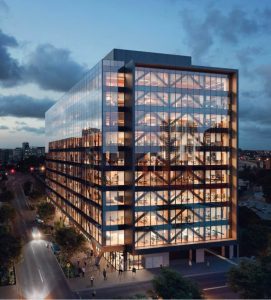
Mr. Peacock cited the King Street building—the world’s tallest mass timber structure (10 stories, 45 meters)—as an example, which has reduced 70% of carbon emissions over its lifecycle.

Mr. Nguyễn Mạnh Bình San, Vice President of SAWA and curator of Vietnam’s first “Mass Timber House in the Forest” exhibition, emphasized that mass timber is not merely a construction material—it has become the “rising star” of global architecture. With its ability to store carbon, reduce greenhouse gas emissions, shorten construction time, and save energy, mass timber enables buildings that are both sustainable and in harmony with nature.
As Vietnam faces the need for a strong transition toward sustainability, mass timber is expected to become a strategic choice for the country’s architecture and construction sectors.

However, in Vietnam, wood is often perceived as an expensive material, and its use is sometimes mistakenly associated with deforestation. Mr. Võ Quang Hà, Chairman of Tavico, explained that all legally sourced wood must have traceable origins—from plantation and cultivation to harvesting, transportation, and final use—under the supervision of independent certification bodies. He added that many regions around the world have long been sustainably managing forests for timber production.
Mr. Hà also affirmed that building with wood is not necessarily more expensive than using conventional materials. Although the raw material cost of wood can be higher, this is offset by lower construction costs, as timber buildings can be completed in much shorter timeframes.
“If the wood source is not verified, building with mass timber loses its meaning in terms of emission reduction and environmental protection,” Mr. Peacock emphasized.
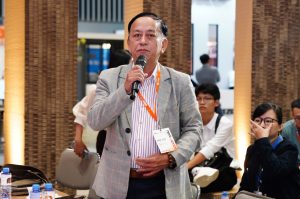
Speaking further about the application of mass timber in construction, Mr. Tôn Thất Liêm, an urban architecture expert from the Ho Chi Minh City Architects Association, expressed excitement that mass timber has “freed” wood from its previous limitations. In the past, natural wood was often too weak or expensive to meet structural demands, but mass timber now offers a sustainable, globally aligned, and cost-effective alternative.
Mr. Liêm also pointed out that Vietnam has a strong advantage in plantation forests—especially pine—which can provide an abundant raw material source for mass timber production. This creates opportunities to establish a domestic supply chain, reduce reliance on imports, and increase the value of Vietnam’s already robust wood export industry.

Nevertheless, experts agree that for mass timber to reach its full potential, clear legal frameworks, technical standards, and incentive policies are needed. At the same time, public perception must evolve to better understand and support this sustainable material.

Currently, mass timber is typically produced from pine, birch, acacia, and similar species using advanced lamination and bonding technologies such as cross-laminating or glulam techniques. The resulting material offers high strength and safety, outperforming traditional natural wood. A key advantage of mass timber is that it is lighter than steel and concrete while still providing excellent load-bearing capacity.