

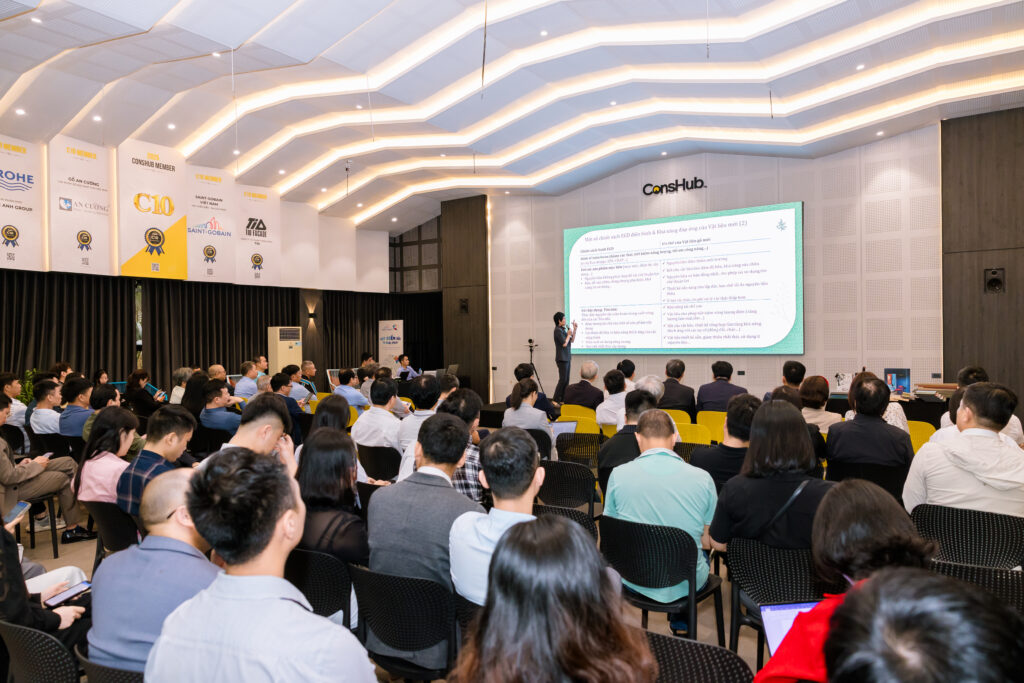
The architecture and interior design sectors are facing increasing pressure to reduce emissions, use resources more efficiently, and meet sustainability criteria. In this context, material selection has become a critical factor, especially as trends such as green buildings, circular economy, and carbon reduction are becoming more prominent.
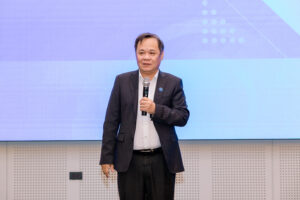
On March 27, 2026, at the National Convention Center, the Forest Talk program themed “Material Transition: From Policy to Architecture” was held in both in-person and online formats. The event was organized by the Ho Chi Minh City Association of Construction Wood (SAWA), with technical support from Forest Trends, and in collaboration with UK Aid, NICFI, and ConsMedia. At the event, Vo Quang Ha – Chairman of SAWA and Chairman of the Board of TAVICO Group – shared that SAWA envisions Forest Talk & Link as an open dialogue platform connecting policymakers, businesses, research organizations, and professionals in architecture and construction, thereby narrowing the gap between policy and practice.
MATERIALS: A BOTTLENECK AND A KEY DRIVER
According to Mr. Ha, trends such as green buildings, circular economy, and carbon reduction are reshaping the construction sector. Material selection is no longer limited to technical or aesthetic considerations, but is increasingly tied to legality, traceability, and environmental performance. For wood materials, these requirements are becoming more stringent. Promoting the use of plantation wood, certified wood such as FSC and PEFC, and alternatives to natural forest timber is considered a key direction to ensure legal, transparent, and sustainable sourcing.
However, material transition cannot occur in isolation at individual stages. At the policy level, environmental protection and emission reduction regulations are gradually establishing criteria for materials. At the business level, companies must adapt across the value chain, from raw material sourcing to production technologies. Meanwhile, at the design and construction stages, architects, engineers, and developers play a decisive role in selecting and applying materials in projects. Beyond technical aspects, Mr. Ha emphasized that material transition also represents a strategic market opportunity. In addition to export value, Vietnam’s wood sector currently provides livelihoods for over one million workers. Promoting the use of domestically sourced plantation wood not only increases economic value but also contributes to forest protection and sustainable development.
From a practical perspective, Ta Duc Quang noted that the biggest barriers today do not lie in market demand, but in systemic bottlenecks. These include the lack of technical standards, outdated design mindsets, high initial investment costs, gaps in specialized training, and notably, the absence of a fully developed domestic supply chain. Meanwhile, the pressure to transition is evident. The search for alternatives to high-emission traditional materials is becoming increasingly urgent. Studies show that engineered wood can significantly reduce the carbon footprint of buildings when applied comprehensively, while also offering advantages such as lighter structural weight, shorter construction time, and optimized lifecycle costs.
THE LEADING ROLE OF POLICY
Amid global economic fluctuations, Vietnam’s wood industry faces both significant opportunities and challenges. Nguyen Minh Cuong highlighted that Vietnam is currently one of the world’s leading exporters of wood products; however, the sector still largely relies on processing with relatively low added value. Dependence on a few major markets also poses risks in the face of trade barriers and geopolitical uncertainties.
To maintain and strengthen its position, Mr. Cuong stressed that the industry must shift from processing to design innovation, brand building, and value-added production. A key direction is investing in processing technologies, developing new products, and integrating sustainability into production.
In practice, some companies have already begun this transformation, focusing not only on manufacturing but also on design, creating products tailored to local climate conditions and with distinct identities.
According to experts at the event, promoting material transition requires a combination of “hard” policies and market-based instruments. Fiscal measures such as taxes, fees, and investment incentives should be strengthened to encourage businesses to innovate and adopt sustainable materials. Public procurement policies are also seen as a critical lever.
Given its large share in total demand, the public sector can act as a “lead buyer,” generating sufficient demand for green materials. Prioritizing environmentally friendly materials in public construction projects would significantly drive market development.
In addition, establishing standards and technical regulations for wood materials in construction is essential to create a clear legal framework, ensure fair competition, and protect consumers.
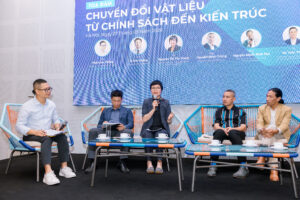
Within the program, discussions focused on global material consumption trends, international and national policy mechanisms, and directions suited to Vietnam’s context.
Forest Talk & Link is envisioned as a thematic dialogue series consisting of six editions throughout 2026, aiming to create a continuous and in-depth exchange platform. The program seeks to connect stakeholders and promote tangible changes in material consumption and sustainable construction practices. According to the plan, the series will continue in Hue, Da Nang, and Quy Nhon, before concluding with a final event at Lang Nho – Ho Lang Nhot.