

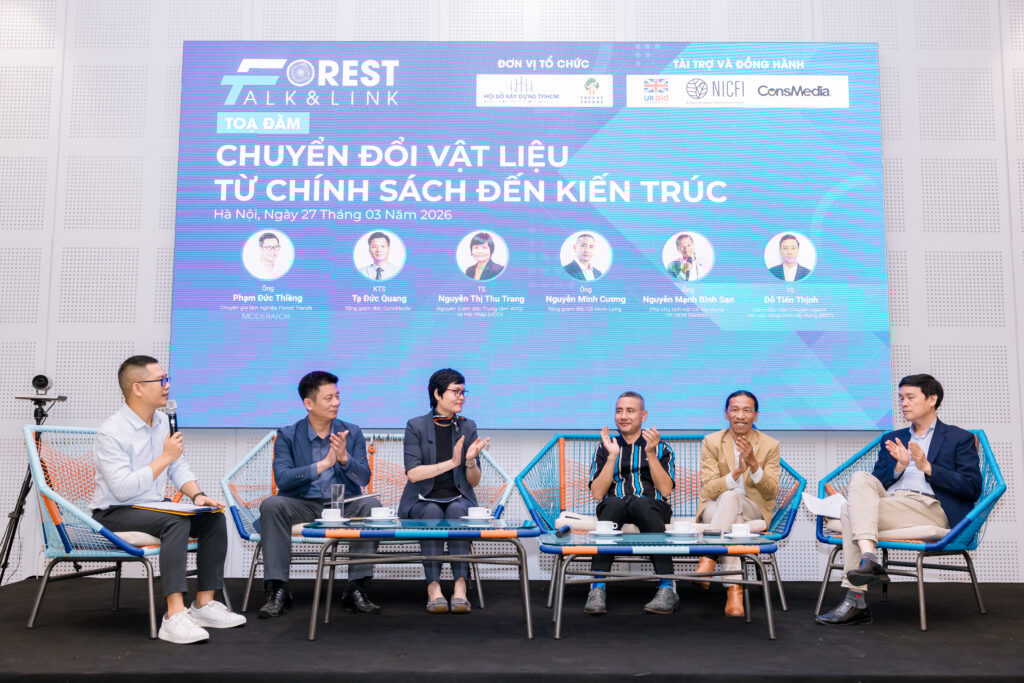
On the morning of March 27, at the National Convention Center, the Ho Chi Minh City Association of Construction Wood (SAWA), in collaboration with Forest Trends, organized the seminar “Material Transition: From Policy to Architecture.” At the seminar, speakers shared and discussed key topics including regulatory frameworks, trends, and requirements for transitioning toward green materials.
Transition to Green Materials such as Structural Wood is Becoming Essential
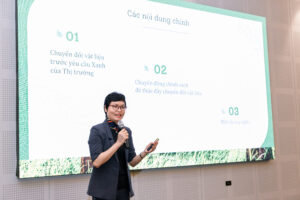
The architecture and interior design sectors are facing increasing pressure to reduce emissions, use resources more efficiently, and meet sustainability standards. In this context, material selection has become a decisive factor, especially as trends such as green buildings, circular economy, and carbon reduction continue to gain momentum. Regarding the policy landscape, Nguyen Thi Thu Trang noted that green regulations and growing consumer demand for sustainable products are key drivers of the transition. The EU market, in particular, is leading global green trends, making it essential for Vietnamese businesses to understand its policies in order to anticipate future directions in the materials sector.
In practice, regulations such as the EUDR, CBAM, and ETS are gradually shaping a stricter legal framework, limiting the use of precious and prohibited timber while prioritizing legally sourced, traceable materials such as acacia, melaleuca, and eucalyptus. At the same time, the trend of using wood materials to replace steel and cement in construction is becoming increasingly evident. This has created favorable conditions for engineered wood products such as glulam, CLT, MPP, composite wood, transparent wood, and even “super wood” to expand their market presence.
From a design and construction perspective, Ta Duc Quang emphasized that alternative materials to steel and concrete must meet multiple criteria simultaneously, including aesthetics, structural performance, economic efficiency, and environmental sustainability. Among these, mass timber is considered highly promising, as it combines mechanical strength comparable to steel with the flexibility of concrete, while also offering the potential to reduce emissions by up to 40%.
Globally, the shift toward engineered wood is accelerating. The timber construction market is projected to reach USD 17.7 billion by 2025 and exceed USD 41 billion by 2035, with an annual growth rate of nearly 10%. In North America, timber floor area has increased by approximately 40% in just one year. Europe continues to lead the trend, while the Asia-Pacific region accounts for over 30% of the market share.
However, in Vietnam, a paradox remains: despite exporting over USD 15 billion worth of wood products annually, the application of engineered wood in construction is still very limited. As of 2024, only around 10 projects have used such materials, with most components still imported. According to Mr. Quang, these barriers stem from systemic gaps, including the disconnect between design ideas and regulatory frameworks, the lack of dedicated standards for mass timber construction, fire safety regulations, outdated design thinking, technological limitations, cost pressures, knowledge gaps, and an underdeveloped supply chain.
To address these challenges, he proposed the urgent development of technical frameworks for wood materials, promoting digitalization in construction, adopting the DfMA (Design for Manufacturing and Assembly) approach, and demonstrating the economic efficiency of new materials. In addition, investing in specialized human resources and gradually building a domestic supply chain are critical steps forward.
The Wood Industry Provides Livelihoods for Over One Million Vietnamese Workers
Following the presentations, a panel discussion titled “Material Transition: From Policy to Architecture” continued to explore policy frameworks, green material standards, livelihoods, and future trends.
Speaking at the panel, Vo Quang Ha – Chairman of SAWA and Chairman of TAVICO Group – emphasized that material transition is occurring across multiple levels, from policy and production to design and construction. This requires coordinated participation across the entire value chain, with traditional craft villages playing a vital bridging role.
“Beyond export value, the wood industry currently provides livelihoods for over one million Vietnamese workers. Promoting the use of domestically sourced plantation wood not only enhances economic value but also contributes to forest protection and sustainable development.
Therefore, material transition is not merely a technical issue, but a strategic market opportunity. If leveraged effectively, it could become a driving force for a new growth cycle for both the wood industry and Vietnam’s construction sector in the coming decade,” Mr. Ha stated.
Focusing on craft villages, To Xuan Phuc highlighted that approximately 1–1.5 million cubic meters of timber currently flow into these systems, much of which is classified as high-risk under the regulations of the Ministry of Agriculture and Environment.
Notably, traditional craft village models relying on natural forest timber are “gradually disappearing” unless transformative changes are implemented. The loss of these villages would not only impact the economy but also cultural heritage and social welfare.
Although there have been efforts to promote public procurement policies to create market opportunities for craft village products, results have remained limited. These villages require support in market access, product standardization, and value addition to reduce dependence on increasingly scarce and expensive illegal natural timber.
To remain competitive and relevant, Nguyen Minh Cuong emphasized the need to build a craft village ecosystem. Instead of competing solely on price, villages should develop specialized roles and support one another.
For example, within a single village, different entities could focus on raw material production, machinery maintenance, or logistics, creating an integrated ecosystem. Craft villages can also adopt a “small but premium” model, focusing on niche, high-value, emotionally driven products.
Mr. Cuong cited luxury brands such as Hermes, which continue to collaborate with traditional artisans, demonstrating the potential of cultural value when properly leveraged.
In the context of Vietnam’s aging population, utilizing older skilled workers in craft villages is also seen as a strategic advantage. Representatives emphasized that the government should play a proactive role in planning, setting standards, and guiding the development of craft villages, thereby strengthening the value chain of Vietnam’s wood industry.
A Systemic Approach is Key to Sustainable Transformation
Concluding the discussion, To Xuan Phuc emphasized that material transition and sustainable wood industry development are not merely technical or market issues, but fundamentally about mindset change and stakeholder coordination. He noted that Vietnam’s wood sector is facing a major opportunity for transformation, yet still lacks effective linkages between businesses, researchers, and policymakers. Policy development should not be purely top-down, but must reflect real-world needs and stakeholder voices.
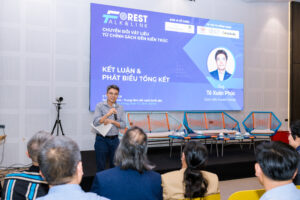
According to Dr. Phuc, transitioning to green materials in construction is inevitable. However, to accelerate and scale this transition, a strong ecosystem is required—one in which all stakeholders collaborate, share knowledge, and jointly shape the future. At that point, the wood industry will move beyond being merely “legal” or “sustainable” to creating higher value—not only economically, but also culturally, emotionally, and environmentally.
Theo Dân Việt